Why Some Universities Have Disabled Turnitin AI Detection
Vanderbilt, Curtin University, the University of Waterloo, and dozens of others have turned off Turnitin's AI detector. Here's exactly why — and what it means for students at institutions that still use it.
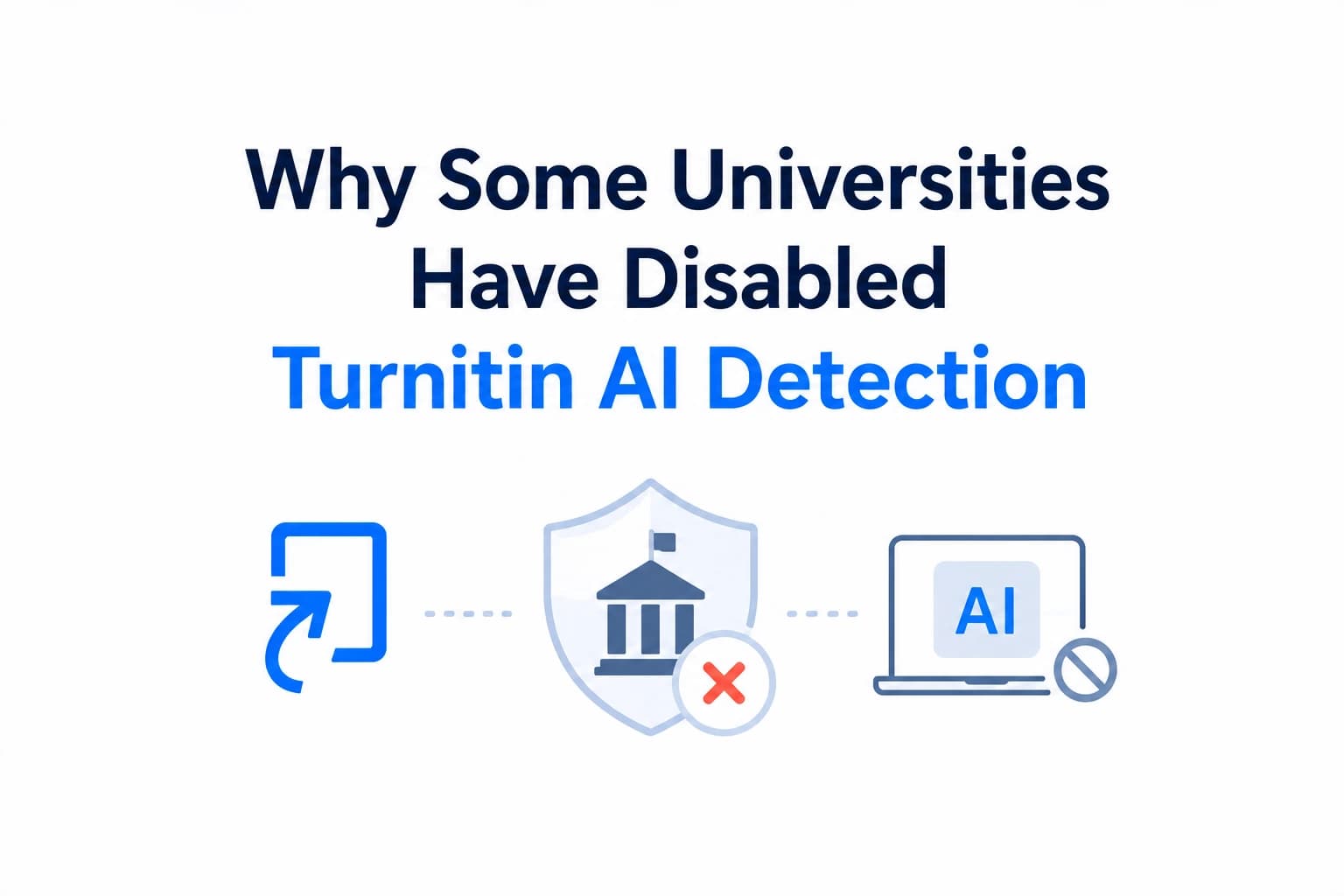
Turnitin's AI detection launched in April 2023 and was quickly adopted by institutions worldwide. Within two years, a growing number of those same institutions had quietly turned it off. Vanderbilt, Curtin University, the University of Waterloo, Johns Hopkins, and dozens of others have disabled AI detection — not because they stopped caring about academic integrity, but because the evidence showed the tool was causing more harm than it was preventing. Understanding why they made that decision tells you a great deal about what AI detection scores actually mean.
Vanderbilt University — the math does not work
Vanderbilt was one of the first major universities to publicly explain its decision, publishing a detailed statement in August 2023. Their reasoning was straightforward and built on Turnitin's own numbers.
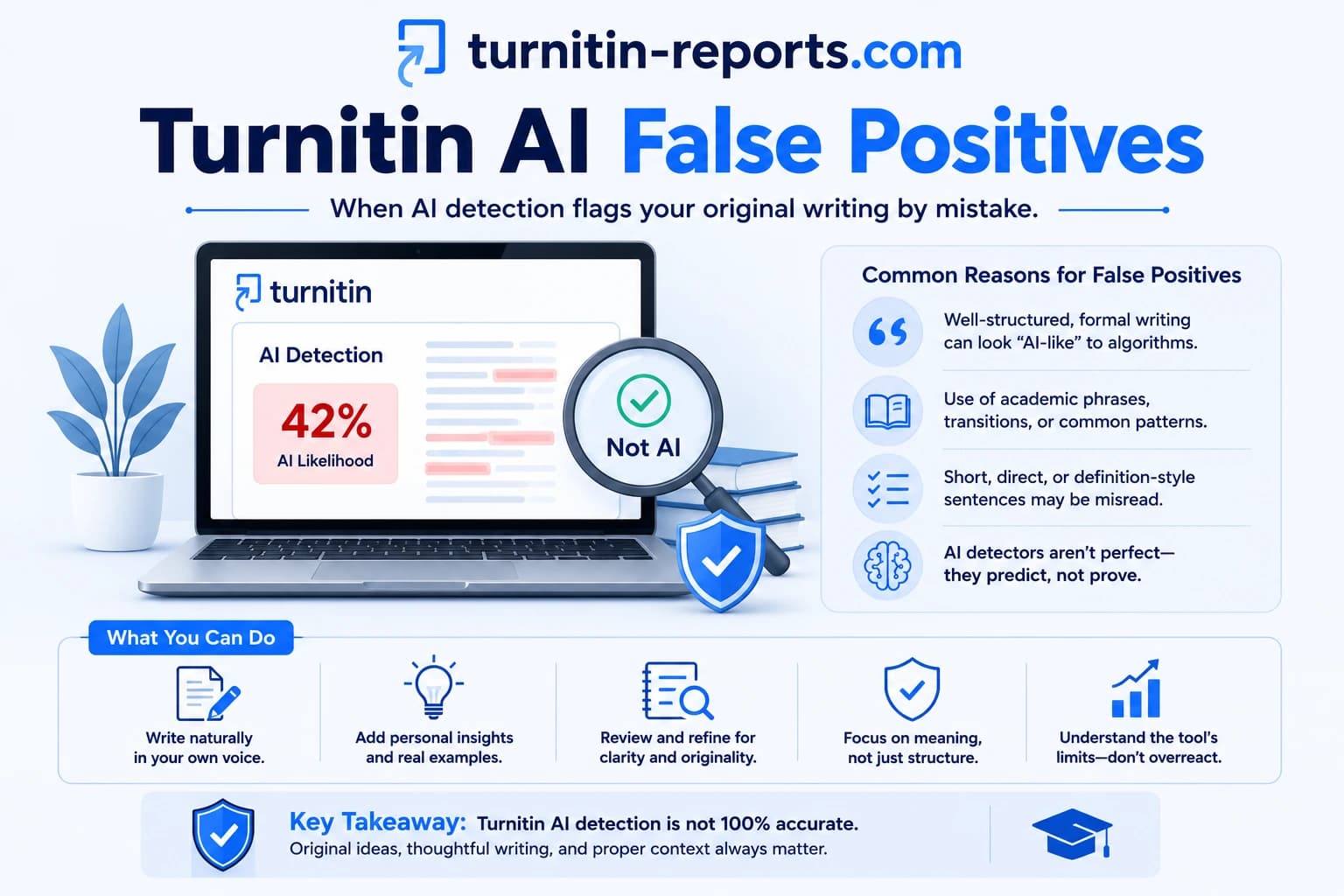
Turnitin claims a 1% false positive rate — meaning roughly 1 in 100 fully human-written submissions may be incorrectly flagged as AI-generated. At a university processing 75,000 submissions per year, Vanderbilt calculated that around 750 student papers could be wrongly labelled as AI-written every year — using Turnitin's own optimistic figure. They concluded: “we do not believe that AI detection software is an effective tool that should be used.”
Vanderbilt also raised concerns about bias, noting that “AI detectors have been found to be more likely to label text written by non-native English speakers as AI-written,” and about transparency — Turnitin “gives no detailed information as to how it determines if a piece of writing is AI-generated or not.” They described AI detection as “a very difficult task for technology to solve (if it is even possible).”
University of Waterloo — their own tests failed
The University of Waterloo in Canada announced in September 2025 that it was discontinuing Turnitin's AI detection across all faculties. Their reason was stark: their own internal testing found that the tool flagged human-written text as 100% AI-generated.
The University concluded that “the costs associated with Turnitin's AI detection feature outweigh the benefits,” cited the same bias concern against non-native English speakers, and recommended that institutions redirect their efforts toward “assessment redesign, AI literacy and integrity” rather than surveillance tools. The similarity report — Turnitin's original plagiarism-checking function — remained active. Only AI detection was removed.
Curtin University — a question of fairness
Curtin University in Australia disabled AI detection from 1 January 2026 across all campuses. Their official statement framed the decision not primarily as a technical failure but as an ethical one: “This change is about fostering trust and clarity within a modern academic culture and continuously improving our assessments to ensure they are secure, fair, relevant and future-ready.”
Curtin's student body is highly international, making the false positive risk for non-native English speakers a practical and significant concern. As with Waterloo, their traditional similarity checking remained in place — the decision was specifically about AI detection and what it was doing to student-institution trust.
Other institutions that have reached the same conclusion
Vanderbilt, Waterloo, and Curtin are among the most publicly documented cases, but they are far from alone. Johns Hopkins University disabled Turnitin AI detection due to “reports of false positives and ongoing fears of falsely accusing students of academic misconduct.” The University of Pittsburgh's Teaching Center concluded that “current AI detection software is not yet reliable enough to be deployed without a substantial risk of false positives.” The University of Cape Town moved against reliance on AI detection scores in late 2025, citing false positive risk to its multilingual student body.
A peer-reviewed study published in Information (MDPI, 2025) found that AI detectors lack transparency and disproportionately affect multilingual students, concluding that no current AI detector is reliable enough to use as standalone evidence in misconduct cases. The expert consensus across institutions and researchers is consistent: the tool introduces more risk than it removes, particularly for students who were never the intended target.
What these decisions mean for students at other institutions
Most universities have not disabled AI detection. Turnitin AI scores are still being generated and reviewed by instructors at thousands of institutions worldwide. What the decisions above tell you is not that your university will follow — it is that the limitations these institutions identified apply equally to your submission, whether or not your institution has acted on them.
The same 1% false positive rate applies. The same bias against non-native English writers applies. The same lack of transparency about how the score is calculated applies. The difference is whether your institution has formally acknowledged those limitations in its policy.
Turnitin itself states in its own guidance that the AI score “should not be used as the sole basis for adverse actions against a student.” That disclaimer exists because Turnitin knows its tool produces errors. Whether your institution treats the score as one signal among several or as near-definitive evidence depends entirely on local policy — which is why knowing your institution's academic integrity guidelines before you submit matters.
What to do if your institution still uses AI detection
The practical response to an environment where AI detection is still active is the same regardless of whether your writing is entirely human: know what your score looks like before your instructor does. Checking your AI score before submission gives you advance notice if your writing style produces an elevated result, time to understand which passages triggered it, and the opportunity to prepare documentation of your process before any conversation begins.
Our guide on Turnitin AI false positives covers which writing styles are most at risk and what evidence to collect. Our post on Turnitin AI detection language support explains the additional risk for non-native English speakers and students writing in unsupported languages.
Frequently asked questions
Why did universities disable Turnitin AI detection?
The most commonly cited reasons are false positives, bias against non-native English speakers, and lack of transparency. Vanderbilt calculated that Turnitin's own 1% false positive rate would wrongly flag around 750 students per year at their institution. The University of Waterloo found in internal testing that the tool flagged human-written text as 100% AI-generated. Curtin University cited fairness concerns for international students.
Does disabling AI detection mean those universities don't check for plagiarism?
No. Every institution that has disabled AI detection has kept Turnitin's similarity report — the original plagiarism-checking function — fully active. The decision to remove AI detection is specifically about the AI writing score, not about abandoning academic integrity checking altogether.
If my university still uses Turnitin AI detection, should I be worried?
Not necessarily — but you should understand what the score means and what it does not. A high AI score is not a finding of misconduct. Turnitin itself says it should not be the sole basis for adverse action. If your writing style produces an elevated score, the practical response is to document your writing process and understand your institution's specific policy on how AI scores are used.
Is there any way to check my AI score before my institution does?
Yes. You can submit your paper through a pre-submission checking service that runs your document through Turnitin under no-repository settings, giving you the same AI Writing Report your instructor will see without affecting your institution's submission. Checking in advance means any elevated score becomes something you can prepare for rather than something you react to after the fact.
Ready to check your paper?
Get your Turnitin report in minutes.
Same report your institution generates — delivered privately, fast.