Does Turnitin Detect ChatGPT? What the AI Report Actually Shows
Yes — Turnitin detects ChatGPT, and raw GPT output typically scores 90–100% on the AI Writing Report. But what happens when you paraphrase it, edit it, or mix it with human writing? Here's what the report actually shows.
The short answer is yes — Turnitin detects ChatGPT, and it does so with a high degree of reliability when text is submitted without modification. But the full picture is more nuanced than a simple yes or no. Detection rates vary depending on which GPT version was used, whether the text was edited, how much of the submission is AI-generated, and how Turnitin's detector has been updated since the content was produced. This guide covers everything the AI Writing Report actually shows when it encounters ChatGPT content.
Does Turnitin officially detect ChatGPT?
Yes. Turnitin launched its AI writing detection in April 2023 specifically targeting ChatGPT and GPT-3 content. Since then, the detection model has been updated to cover GPT-4, GPT-4o, and GPT-5, as well as other major language models including Claude, Gemini, and Meta's LLaMA. Turnitin's chief product officer Annie Chechitelli has described the detection mechanism publicly: the system analyses how often the next most probable word is used in a piece of text, comparing that predictability pattern against what is statistically consistent with AI generation versus human writing.
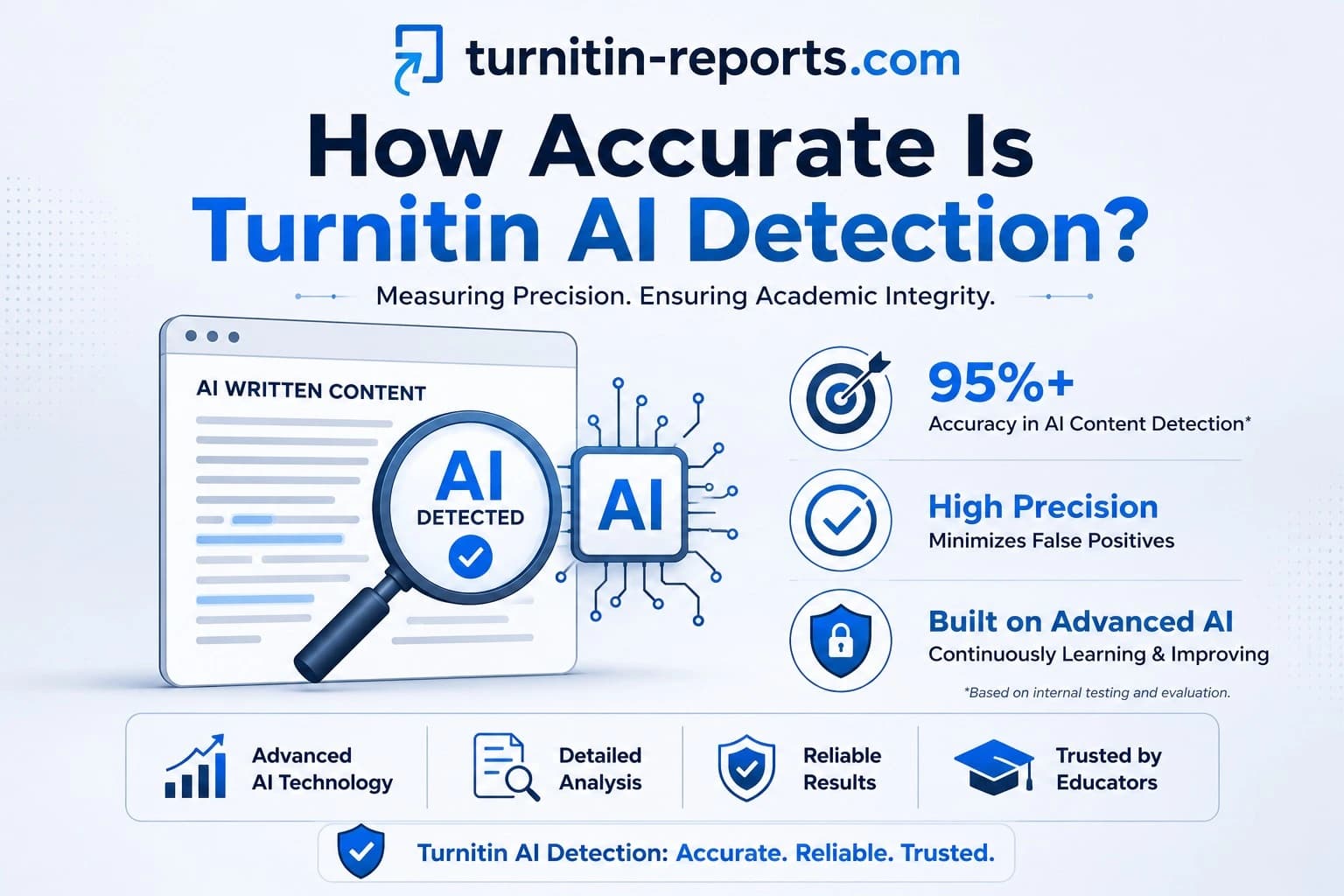
Turnitin claims its detector identifies AI-generated content with a 98% confidence rating when it flags something. However, that figure refers to its confidence in the flags it raises — not to how much AI content it catches overall. Chechitelli acknowledged separately that the system intentionally misses around 15% of AI-generated text in order to keep false positive rates below 1%. That is a deliberate trade-off: lower recall in exchange for fewer wrongful accusations.
What score does ChatGPT text typically receive?
Testing conducted by BestColleges using Turnitin's live detector found a clear pattern:
- 100% ChatGPT-generated essay submitted raw: 100% AI score
- Hybrid submission (approximately 65% AI, 35% human input): 48% AI score
- Fully human-written content: 0% AI score
A separate study testing detection rates across multiple AI models found that ChatGPT (GPT-4o) was the most detectable of the major AI writing tools, scoring a 90% detection rate on Turnitin across 50 test prompts. Gemini came in at 87%, and Claude at 84% — making Claude the hardest to detect, likely because Anthropic's training produces more varied, less formulaic output.
The threshold that matters: Turnitin only displays a numerical AI score when the detected AI content reaches 20% or more of the submission. Below that level, the report shows an asterisk (*%) rather than a number, and most institutions do not act on it. Our post on what the asterisk percentage means explains this threshold in detail.
What the AI Writing Report actually shows
When Turnitin detects ChatGPT content, the AI Writing Report highlights specific passages rather than just showing an overall score. The highlighting uses two distinct colours:
- Cyan highlighting — text identified as likely AI-generated directly from a language model
- Purple highlighting — text identified as AI-generated content that appears to have subsequently been paraphrased or processed through a rewriting tool
The overall score breaks down into two interactive categories: “AI-generated only” and “AI-generated text that was AI-paraphrased.” This breakdown was added in July 2024 specifically to help instructors distinguish between raw AI output and AI content that a student has attempted to disguise. Instructors can click either category to jump to the first highlighted passage in that category.
What happens when ChatGPT text is paraphrased?
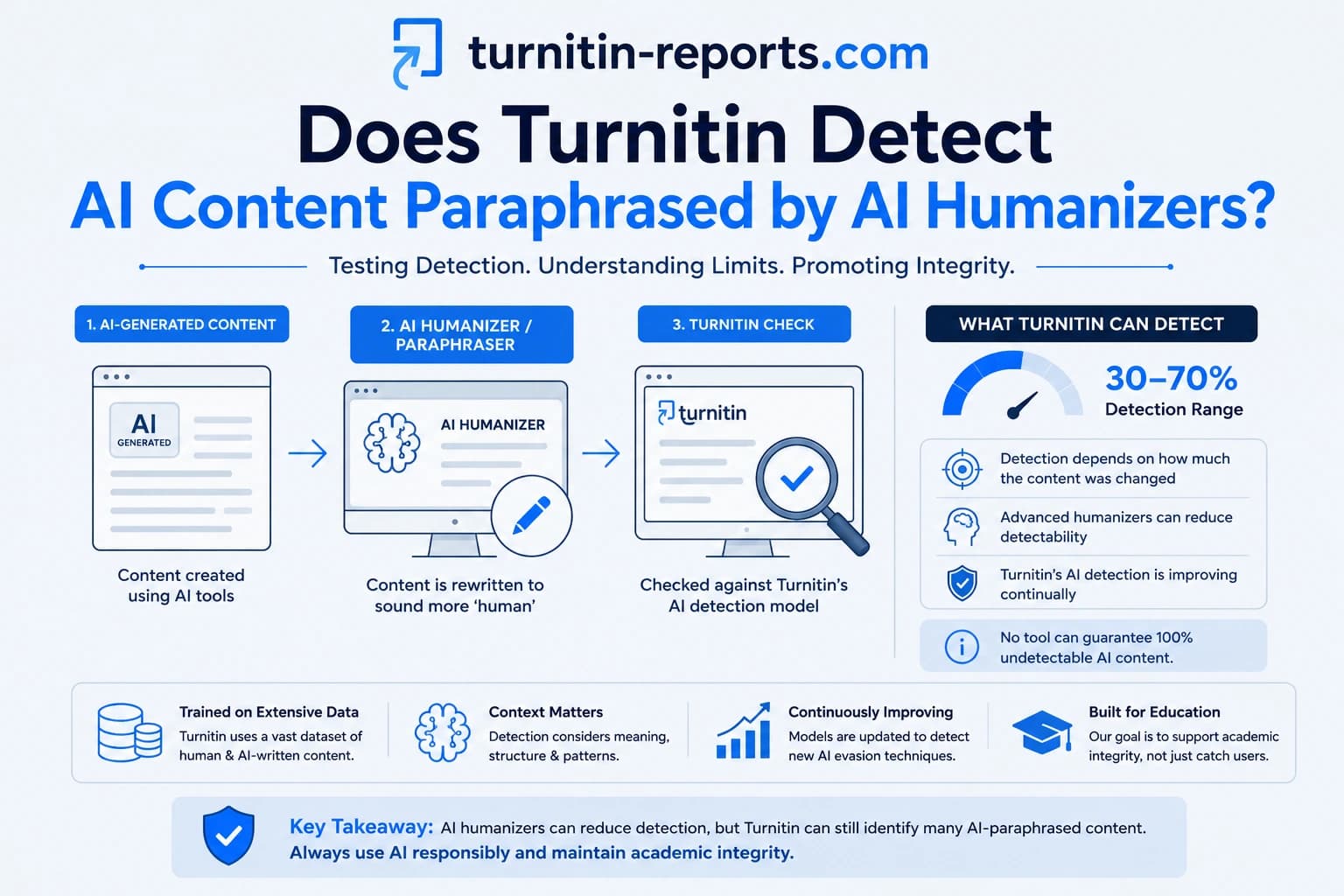
Paraphrasing ChatGPT output through a tool like QuillBot does not reliably bypass Turnitin detection. Turnitin's model updates specifically target the statistical patterns that paraphrasing tools leave behind — synonym replacement and sentence restructuring changes the surface wording but not the underlying predictability signature of the original AI text.
QuillBot's more aggressive paraphrasing modes (such as “Creative” mode) produce lower detection rates than basic “Fluency” mode, but neither eliminates detection reliably. Purple highlighting in the AI Writing Report is Turnitin's specific signal that it has identified AI content that has been paraphrased — meaning the combination is detected, not just the raw AI text. Our full post on whether Turnitin detects AI humanizers covers how the bypasser detection layer works.
What happens when ChatGPT text is edited by a human?
Human editing is the most effective way to reduce AI detection scores — but it is not a clean bypass. The BestColleges hybrid test showed that a submission that was 65% AI-generated scored 48% on Turnitin's AI detector, suggesting that human editing suppresses the score beyond what the raw AI percentage would predict. The more substantially a human rewrites the content — changing sentence structure, adding personal voice, reordering arguments — the lower the detection score.
This also creates a meaningful false positive risk: a student who uses AI as a starting point and rewrites substantially may produce text that still scores above 20%, even if most of the final submission is genuinely their own work. That is why Turnitin itself states the AI score should not serve as the sole basis for adverse action against a student.
False positives — the risk that does not go away
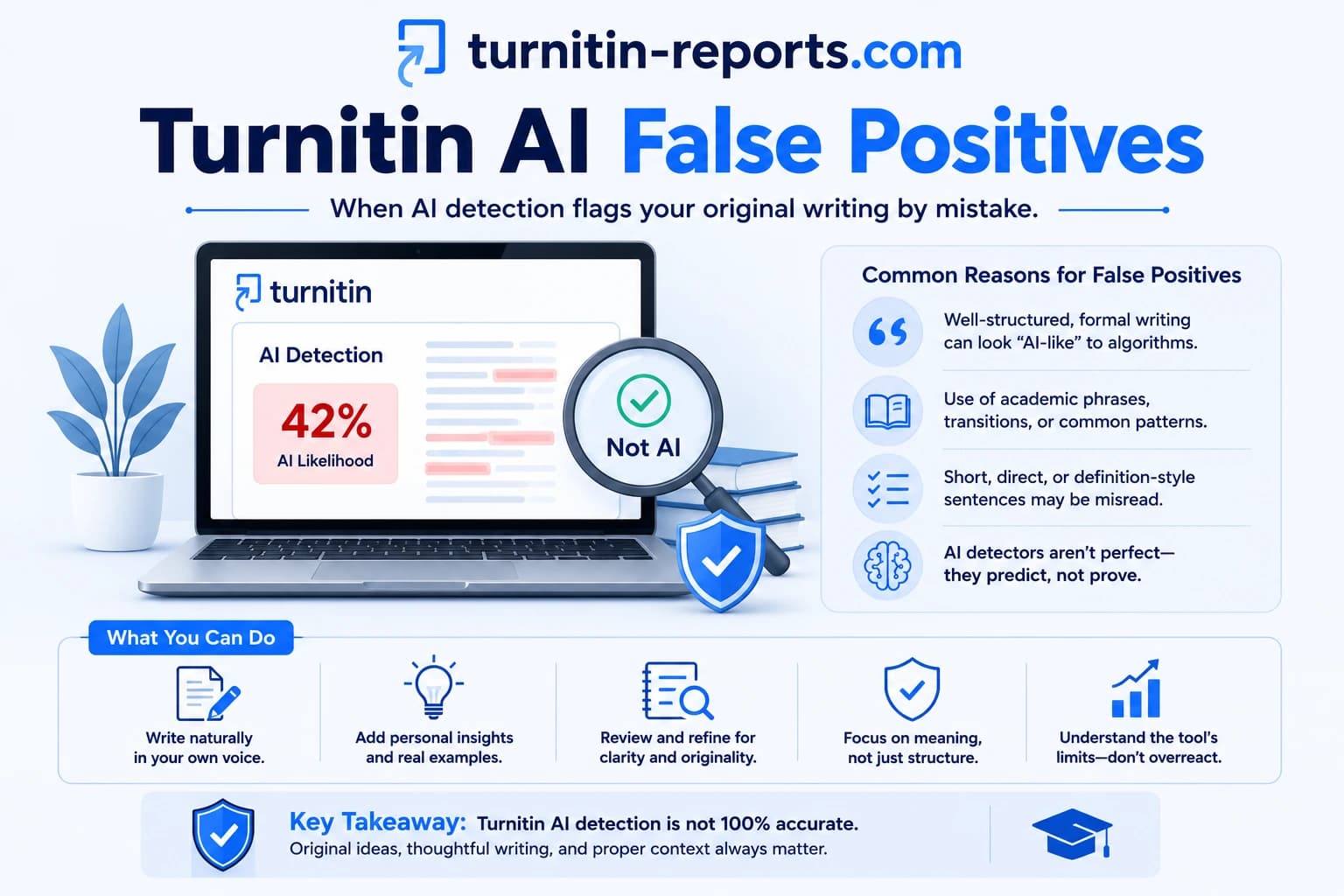
Turnitin's official false positive rate is under 1% for documents where more than 20% of the content is AI-generated. Independent research tells a different story. Documented false positive cases include students whose human-written work was flagged at 100% AI, and at least one case where a submission written before ChatGPT existed was classified as AI-generated. A 2024 peer-reviewed study found overall false positive rates closer to 4.2%.
The risk is not evenly distributed. Non-native English speakers face dramatically higher false positive rates — the Stanford HAI study found over 61% of TOEFL essays (written under exam conditions with no AI assistance) were incorrectly flagged. Our post on Turnitin AI false positives explains which writing styles are most at risk and what to do if you are wrongly flagged.
The bottom line for students
If you submitted raw ChatGPT output, Turnitin will very likely detect it. If you paraphrased it through a tool, Turnitin will still likely detect it — and will flag it as paraphrased AI specifically. If you used ChatGPT for research or as a starting point and rewrote the content substantially, your score may be lower but is not guaranteed to be zero.
The most important thing to know before your submission deadline is what your own AI score actually looks like — before your instructor sees it. Checking in advance gives you time to understand what triggered the flag and either revise or prepare your documentation. Our guide on how to reduce your Turnitin AI score covers every legitimate technique.
Frequently asked questions
Does Turnitin detect all versions of ChatGPT?
Yes. Turnitin's AI detector has been updated to cover GPT-3, GPT-3.5, GPT-4, GPT-4o, and GPT-5. The detection model is updated continuously as new AI models are released. Turnitin also detects content from other major AI tools including Claude, Gemini, and LLaMA — it is not limited to ChatGPT specifically.
What score will a ChatGPT essay get on Turnitin?
A 100% ChatGPT-generated essay submitted without any modification typically receives a 100% AI score. Hybrid submissions — where AI-generated content has been partially rewritten by a human — tend to score lower than the actual AI percentage would suggest. A submission that is 65% AI-generated may score around 48% on Turnitin's detector, based on BestColleges testing.
Can Turnitin detect ChatGPT if you paraphrase it?
Yes, in most cases. Turnitin specifically added a paraphrasing detection layer in December 2023, updated further in July 2024. Paraphrasing tools change the surface wording but leave statistical patterns that Turnitin is trained to identify. Purple highlighting in the AI Writing Report specifically indicates AI content that appears to have been paraphrased — so the report distinguishes between raw AI output and paraphrased AI output separately.
Is Turnitin accurate at detecting ChatGPT?
For raw, unmodified ChatGPT text, detection rates are high — around 90% in independent testing. Turnitin claims 98% confidence in the flags it raises, though it intentionally misses around 15% of AI content to keep false positive rates low. The weakest point is false positives: non-native English speakers and students with simple writing styles can receive elevated AI scores on entirely human-written work.
Ready to check your paper?
Get your Turnitin report in minutes.
Same report your institution generates — delivered privately, fast.