Can Turnitin Detect QuillBot? What the Evidence Actually Shows
QuillBot still lowers your similarity score — but since December 2023 it no longer bypasses Turnitin's AI Writing Report. Here's what the purple highlight means, how detection works, and what the test data actually shows.
QuillBot is one of the most widely used paraphrasing tools among students, and for years it was effective at reducing Turnitin similarity scores. That changed in December 2023 when Turnitin launched a dedicated AI paraphrasing detection model — built specifically to catch text that was AI-generated and then run through a tool like QuillBot. The evidence since then is clear: QuillBot does not reliably bypass Turnitin's AI Writing Report, and in some cases makes detection more likely. Here is everything the research actually shows.
When did Turnitin start detecting QuillBot?
Turnitin launched its upgraded AI detection model — AIW-2 — on December 6, 2023. The previous model (AIW-1) was not designed to catch paraphrased AI text, and QuillBot was widely used to reduce AI scores under it. AIW-2 changed this directly. Turnitin's own documentation describes the upgrade: “Compared to AIW-1, AIW-2 improves LLM detection performance, especially detecting AI-generated text that has been modified by AI paraphrasing tools (otherwise known as ‘text spinners’).”
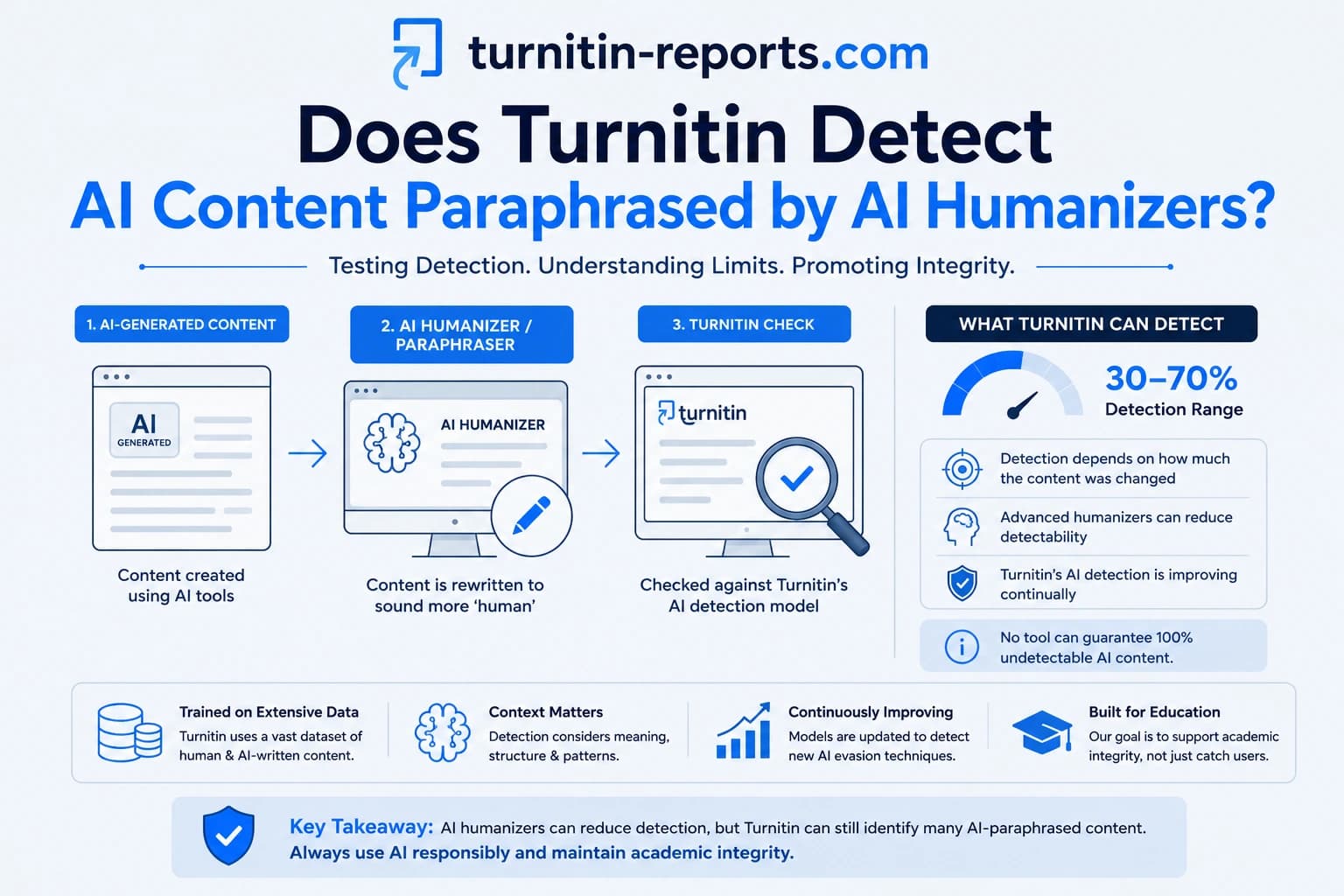
The improvement in paraphrasing detection was substantial. On paraphrased AI text, AIW-1 achieved a sentence-level recall rate of 45.56%. AIW-2 achieves 85.22% — nearly double. QuillBot is explicitly named in Turnitin's documentation as a primary example of the tools the model was trained to detect. A further update in August 2025 added detection of AI bypasser tools, extending coverage even further. For a deeper look at how Turnitin's AI detector specifically handles QuillBot-paraphrased content, the breakdown covers what the report flags and why.
How Turnitin detects QuillBot — the mechanism
Turnitin does not catch QuillBot through text matching. It uses two analytical layers that operate independently of the specific words in the text:
- Perplexity and burstiness analysis. AI-generated text has characteristically low perplexity — word choices are highly predictable — and low burstiness — sentence lengths are uniformly similar. QuillBot swaps synonyms and restructures sentences, but it does not change these underlying statistical fingerprints. The rhythm and predictability of AI-generated text survive paraphrasing because they are properties of how the original content was generated, not which specific words were chosen.
- Semantic pattern analysis. Since 2024, Turnitin has enhanced its models to detect semantic similarity — the underlying structure and flow of ideas — rather than surface-level wording. The architecture of an AI-generated argument, the sequencing of points, and the paragraph-level organisation tend to persist through paraphrasing even when individual sentences are substantially reworded.
Does QuillBot affect the similarity report or the AI report?
Both reports are affected, but in opposite ways — and this distinction matters.
The Similarity Report: QuillBot typically reduces similarity scores because synonym replacement makes the text less likely to match indexed sources verbatim. This was the original reason students used it, and it still works for that purpose. However, heavy paraphrasing can paradoxically raise the similarity score if the restructured text ends up matching different sources that happen to use those synonym choices.
The AI Writing Report: This is where QuillBot gets caught. The AI score is generated by a completely separate model from the similarity checker and is entirely independent of the similarity percentage. QuillBot can simultaneously lower your similarity score and raise your AI score — a combination that is immediately visible to instructors reviewing both reports side by side. Our post on how Turnitin detects ChatGPT explains how these two reports work independently.
The purple highlight — what it means for QuillBot
When Turnitin's AI Writing Report detects QuillBot-processed content, it uses a specific colour to flag it. The report uses two distinct highlights:
- Cyan highlighting — text identified as directly AI-generated from a language model
- Purple highlighting — text identified as AI-generated content that was subsequently processed through an AI paraphrasing tool
Purple highlighting is Turnitin's direct signal to the instructor that a paraphrasing tool was likely used to disguise AI-generated content. It is not a neutral flag — it specifically communicates that text manipulation was attempted. The overall AI score also breaks into two interactive categories: “AI-generated only” and “AI-generated text that was AI-paraphrased,” giving instructors a precise breakdown of which passages were directly generated versus which were disguised.
Detection rates by QuillBot mode
Testing of 50 ChatGPT-generated essays run through different QuillBot modes produced the following average AI scores on Turnitin:
- Raw ChatGPT (no QuillBot): 86% average AI score — 0% pass rate under 20%
- QuillBot Fluency mode: 71% — 2% pass rate
- QuillBot Standard mode: 62% — 6% pass rate
- QuillBot Academic mode: 58% — 10% pass rate
- QuillBot Creative mode: 49% — 14% pass rate
Even in Creative mode — the most aggressive paraphrasing setting — the average score of 49% remains well above the 20% threshold that most institutions use as a review trigger. A 14% pass rate means 86 out of 100 QuillBot Creative submissions would still be flagged. Critically, more aggressive paraphrasing can actually increase detection rates in some cases — extensive restructuring creates patterns that Turnitin flags even more strongly than the original AI text.
What about other paraphrasing tools?
Turnitin's model was not built exclusively for QuillBot — it targets the entire category of AI word spinners. Spinbot and Wordtune operate on the same synonym-substitution and sentence-restructuring mechanisms as QuillBot, and are covered by the same detection model. Detection rates for Spinbot-processed text are reported at 71–88%, comparable to QuillBot Fluency and Standard modes. Any tool that takes AI-generated text and restructures it at the surface level leaves the same underlying statistical fingerprint that Turnitin's AIW-2 model was trained to identify.
The bottom line
QuillBot reduces Turnitin similarity scores — that part still works. What it does not do is bypass the AI Writing Report. After December 2023, using QuillBot on AI-generated text does not hide the AI origin — it adds a purple flag that specifically tells the instructor a paraphrasing tool was used on top of AI-generated content. That is a worse outcome than submitting the AI text unmodified.
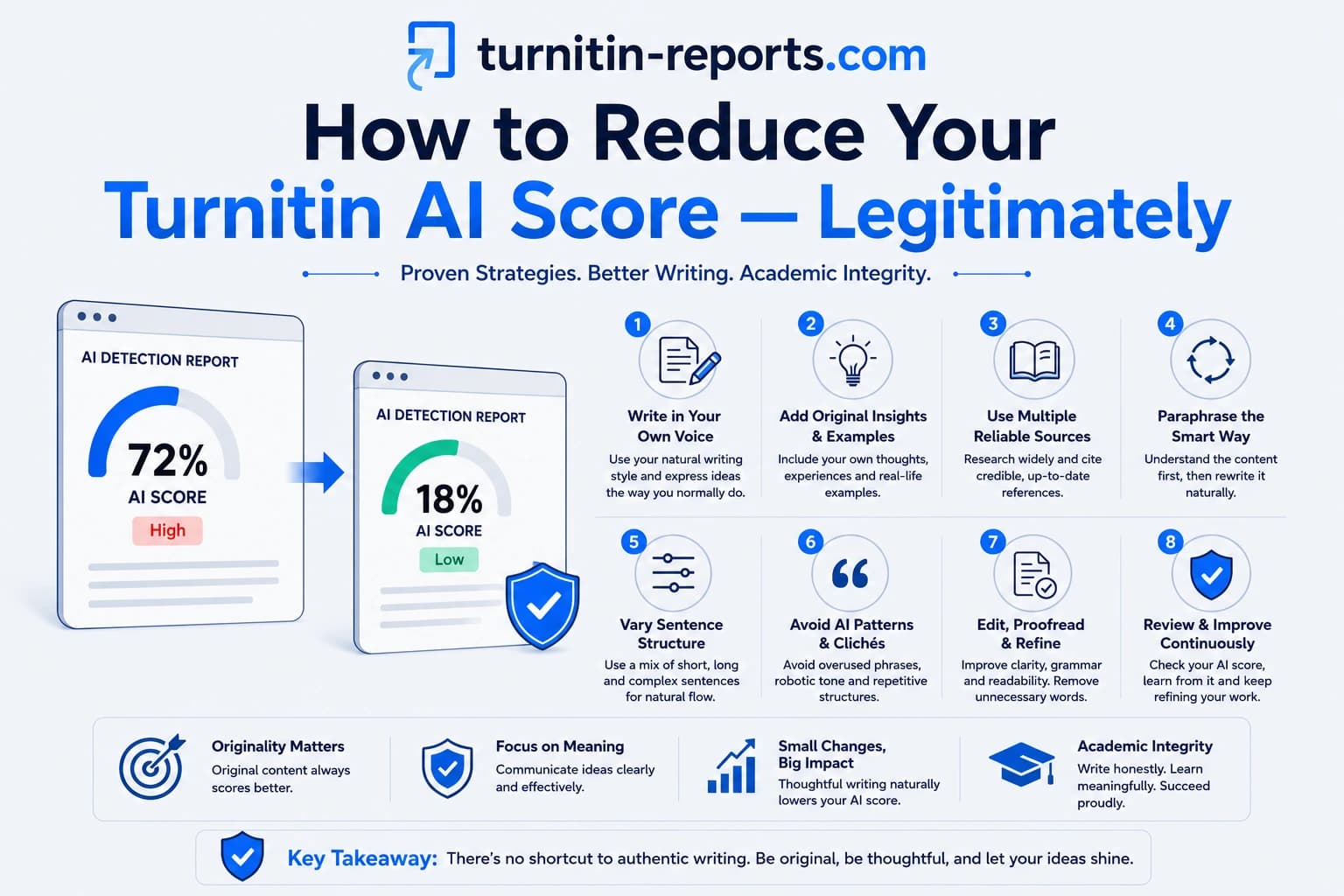
If your concern is understanding what your AI score looks like before your instructor does, the only reliable way to know is to check it in advance. Our guide on how to reduce your Turnitin AI score covers the legitimate techniques that actually work — none of which involve paraphrasing tools.
Frequently asked questions
Can QuillBot bypass Turnitin in 2025 and 2026?
No. Since Turnitin launched its AIW-2 model in December 2023, QuillBot does not reliably bypass the AI Writing Report. Even in Creative mode — the most aggressive setting — testing shows an average AI score of 49% and only a 14% chance of scoring below the 20% threshold. The Turnitin model detects the statistical patterns of AI-generated text even after paraphrasing.
Does QuillBot affect the similarity score or the AI score?
Both, but differently. QuillBot typically lowers the similarity score by replacing words with synonyms, making text less likely to match indexed sources verbatim. However, it raises the AI score by triggering purple highlighting in the AI Writing Report — a specific flag indicating AI-generated content was paraphrased. The two reports are independent, so QuillBot can lower one score while raising the other simultaneously.
What does the purple highlight in Turnitin mean?
Purple highlighting in the AI Writing Report indicates text that Turnitin has identified as both AI-generated and subsequently processed through an AI paraphrasing tool such as QuillBot. It is a separate category from cyan highlighting, which flags directly AI-generated text. Purple highlighting specifically signals to the instructor that an attempt was made to disguise AI-generated content using a paraphrasing tool.
Does Turnitin detect other paraphrasing tools besides QuillBot?
Yes. Turnitin's paraphrasing detection model targets all AI word spinners — not just QuillBot. Spinbot, Wordtune, and similar tools operate on the same synonym-substitution mechanism and are covered by the same detection model. Any tool that restructures AI-generated text at the surface level leaves the underlying statistical fingerprint that Turnitin's model is trained to identify.
Ready to check your paper?
Get your Turnitin report in minutes.
Same report your institution generates — delivered privately, fast.