Turnitin vs Grammarly: Which Is the Better Plagiarism Checker?
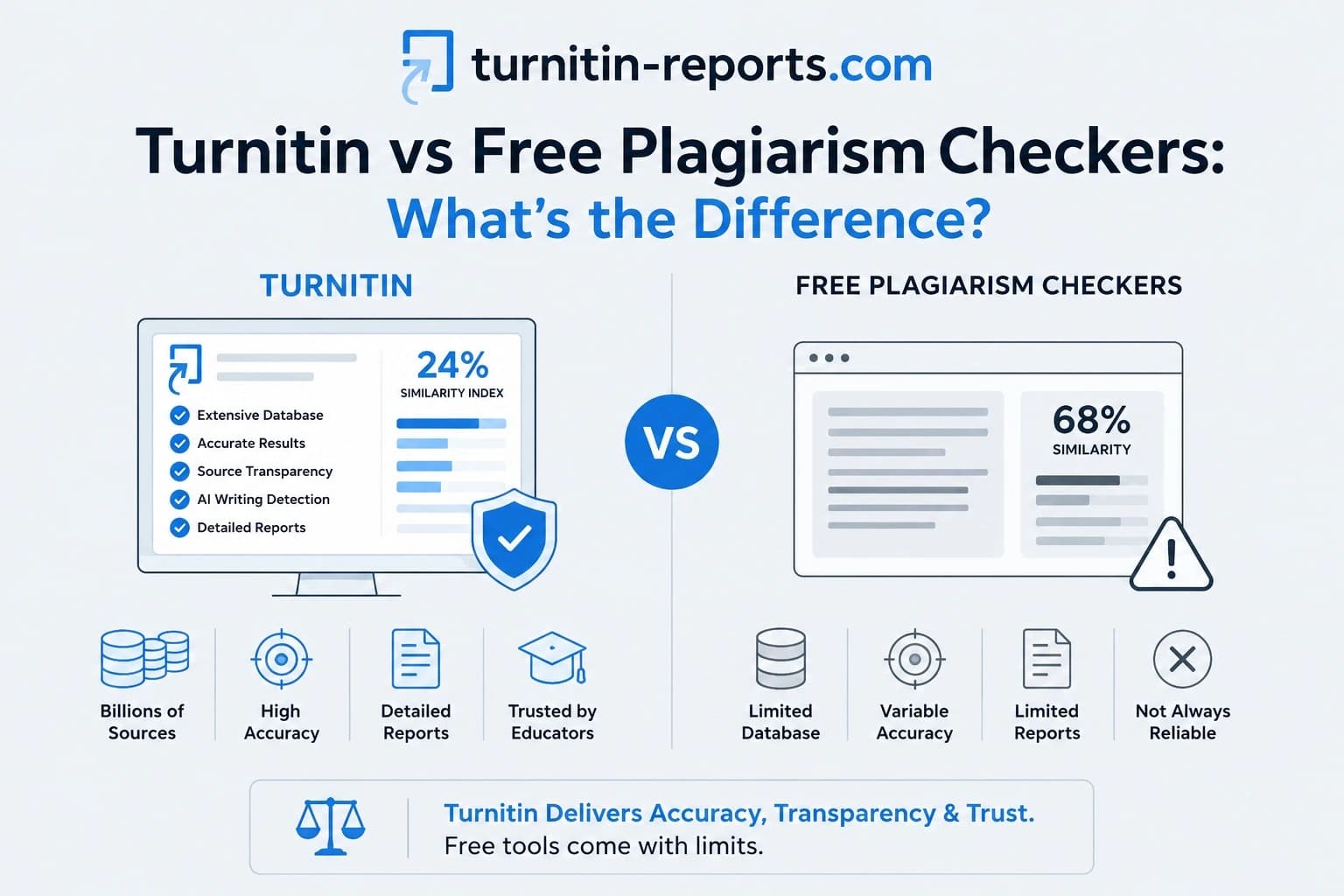
A clean Grammarly result doesn't mean Turnitin will agree. The two tools check against completely different databases — and the one your institution uses has access to sources Grammarly can't see.
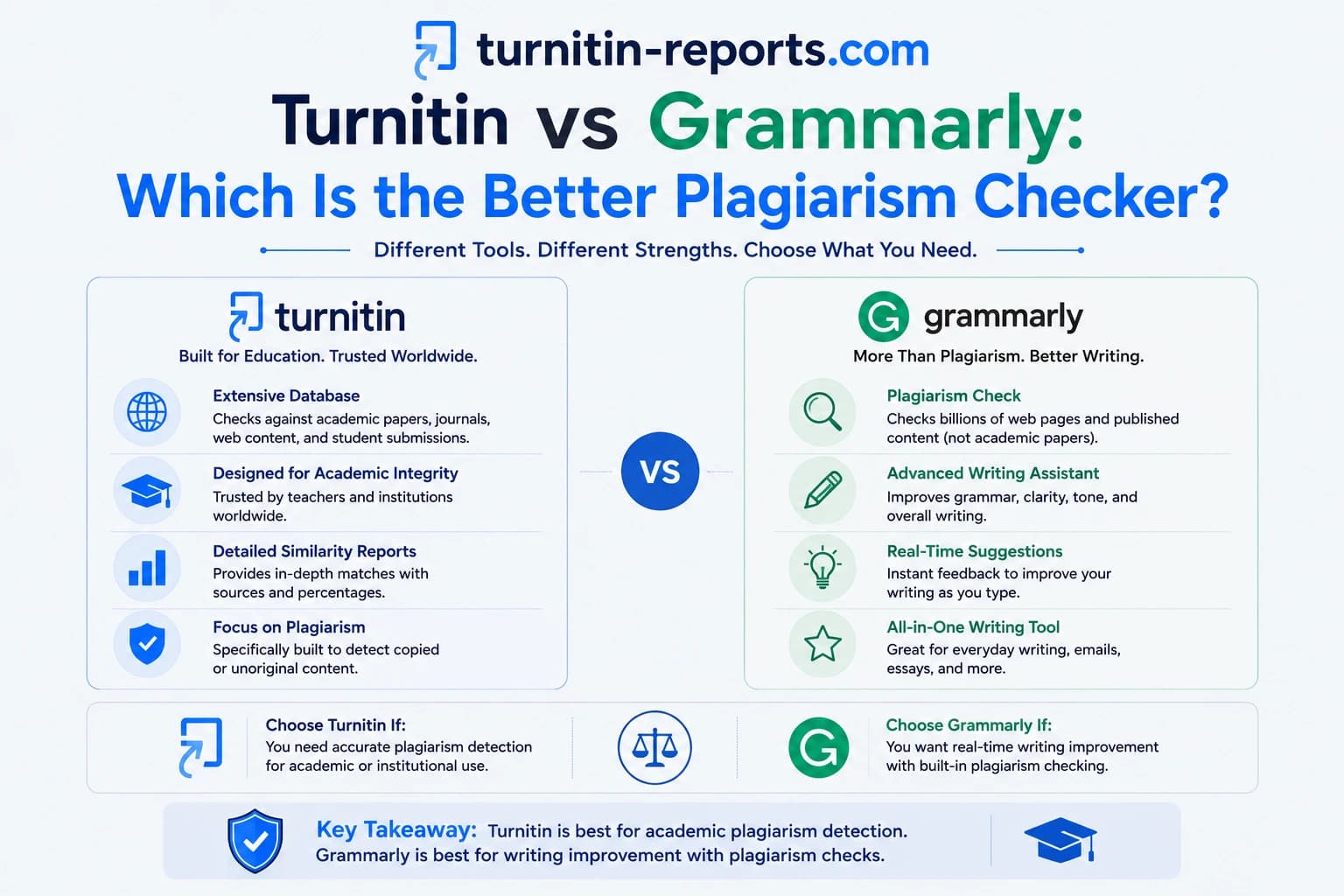
“I checked it with Grammarly and it came back clean.” This is one of the most common things students say before they get flagged by Turnitin. The two tools are not interchangeable — they check against fundamentally different databases, use different detection methods, and are built for completely different purposes. Here's exactly what each one does and why a clean Grammarly result tells you very little about what Turnitin will find.
What Grammarly's plagiarism checker actually does
Grammarly's plagiarism checker is a Premium feature that scans your text against approximately 16 billion web pages and a selection of academic articles through ProQuest. It uses string-matching technology — looking for exact or near-exact sequences of words that appear elsewhere online.
This makes it genuinely useful for one specific thing: catching verbatim text that exists on the public web. If you copied a paragraph directly from a Wikipedia article or a blog post, Grammarly will likely find it. It is fast, accessible, and requires no institutional login.
But string-matching has hard limits. Grammarly does not understand meaning — it matches patterns. Paraphrased content, synonym substitution, and restructured sentences typically pass through undetected. It also has no access to any database of previously submitted student work, which is where the most dangerous plagiarism actually hides.
What Turnitin checks that Grammarly cannot reach
Turnitin's Similarity tool checks against a substantially larger and more consequential set of sources:
- 99 billion web pages — roughly six times Grammarly's web coverage
- Over 1.6 billion student papers submitted through Turnitin by universities worldwide
- Hundreds of millions of academic journal articles and books from major publishers
That student paper repository is the critical difference. Every paper submitted through Turnitin at institutions around the world enters this database. If you reuse an essay you submitted in a different course, borrow heavily from a classmate's work, or submit something that was previously turned in at another university — Turnitin can find it. Grammarly has zero access to any of this.
Turnitin also uses semantic analysis alongside string-matching, which means it can detect paraphrased content and restructured sentences that preserve the original meaning even when the wording changes. This is the gap where most sophisticated plagiarism lives — and where Grammarly consistently falls short.
The critical differences, side by side
Here is how the two tools compare on the factors that matter most for academic submissions:
- Database size: Grammarly checks 16 billion web pages. Turnitin checks 99 billion web pages plus 1.6 billion student papers plus academic journals.
- Student paper repository: Grammarly has none. Turnitin's is the largest in the world.
- Paraphrasing detection: Grammarly misses most of it. Turnitin uses semantic analysis to catch meaning-level matches.
- AI writing detection: Grammarly offers basic AI detection. Turnitin's AI detector is purpose-built for academic contexts and is what your institution actually uses.
- Access model: Grammarly is available to anyone as an individual subscription. Turnitin is only accessible through institutional licences — your university pays for it, and it's what your lecturer uses when they check your submission.
- Report format: Grammarly shows a percentage and highlights matches. Turnitin produces a full Originality Report with source-by-source breakdown, exclusion filters, and institutional audit trails.
Why a clean Grammarly result doesn't protect you
When your lecturer submits your paper to Turnitin, it is checked against sources Grammarly never sees. The student paper database alone accounts for a large proportion of flagged matches in academic settings — recycled essays, shared notes, and work passed between students across years and institutions. None of this is visible to Grammarly.
Paraphrasing compounds the problem. Students who rewrite source material sentence by sentence — changing words but preserving structure and argument — often pass a Grammarly check with ease. Turnitin's semantic analysis is specifically designed to catch this pattern. Getting a 0% on Grammarly after paraphrasing heavily does not mean Turnitin will agree.
The same applies to AI-generated content. Grammarly's AI detection is a general-purpose tool. Turnitin's is trained specifically on academic writing and student submissions, making it meaningfully more sensitive in that context.
When Grammarly is actually worth using
Grammarly is not useless — it is just the wrong tool for checking whether your academic submission will pass Turnitin. There are situations where it genuinely helps:
- Grammar and style editing. This is what Grammarly is primarily built for and where it excels. Using it to polish your writing before submission is entirely reasonable.
- Checking blog posts or professional writing that will never go near an academic plagiarism checker. For non-institutional writing, Grammarly's web database is adequate.
- A quick sanity check for obvious copy-paste errors before you do a proper Turnitin check. It takes seconds and catches the most careless mistakes.
For anything being submitted to an institution that uses Turnitin, Grammarly is not a substitute. The only way to know what your Turnitin report will show is to run the paper through Turnitin itself.
Frequently asked questions
Does Grammarly check against Turnitin's database?
No. Grammarly has no connection to Turnitin's database and no access to its student paper repository. They are entirely separate services with entirely separate databases.
Can I use both tools together?
Yes, and there is a reasonable case for doing so. Use Grammarly to improve your writing and catch obvious grammar issues, then run a proper Turnitin check to see your actual similarity score before submission. The two serve different purposes.
Is Grammarly Premium worth it for students?
For writing quality, it depends on how much you value the grammar and style feedback. For plagiarism checking purposes specifically, it is not a substitute for Turnitin and should not be treated as one.
Will Turnitin flag content that Grammarly missed?
Yes, routinely. Paraphrased content, previously submitted student papers, and text from subscription-only journals are all invisible to Grammarly but checked by Turnitin. A clean Grammarly result on this type of content means nothing for your Turnitin score.
Ready to check your paper?
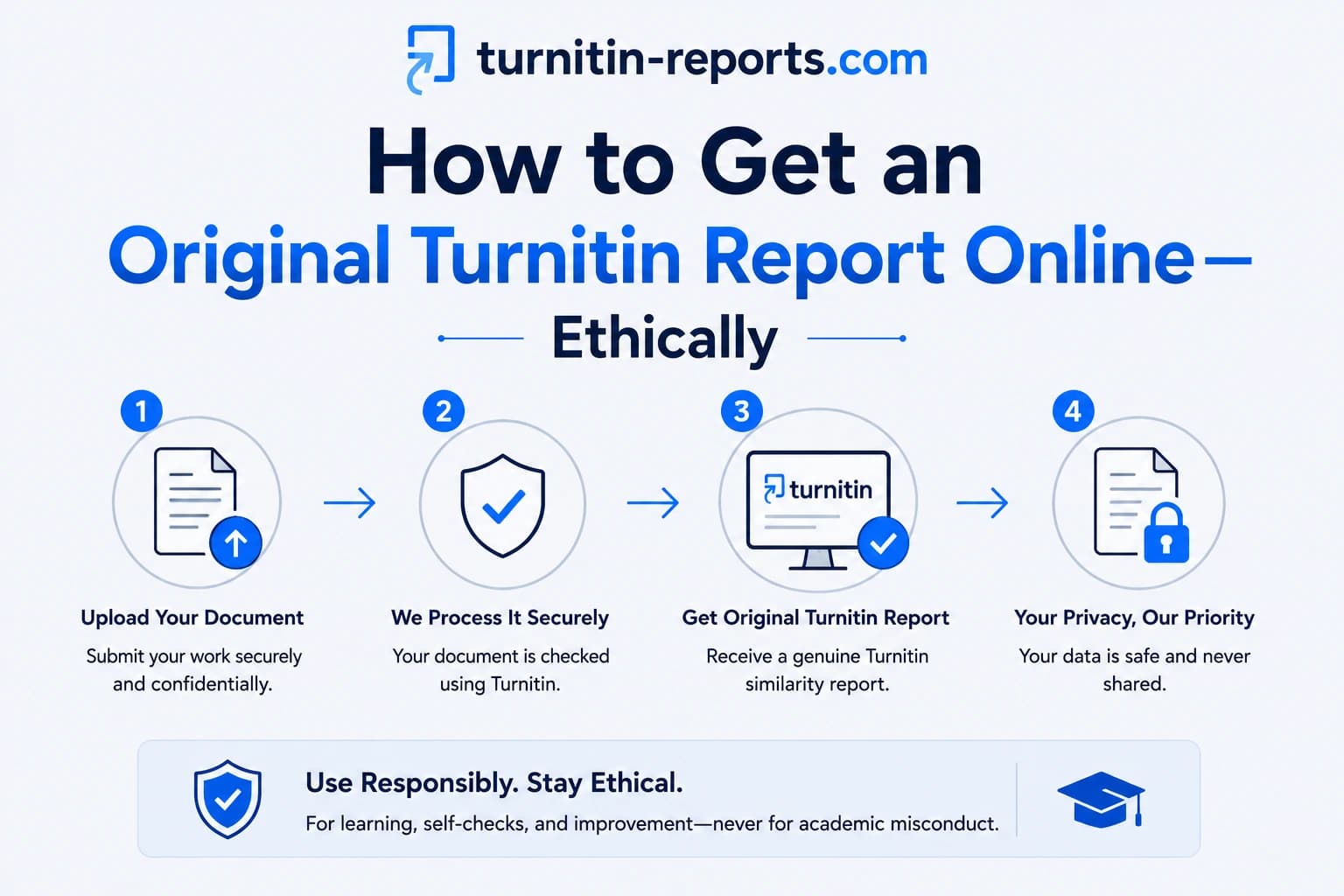
Get your Turnitin report in minutes.
Same report your institution generates — delivered privately, fast.