Turnitin vs SafeAssign vs Copyleaks: Which Does Your University Use?
Turnitin, SafeAssign, and Copyleaks check against different databases, produce different reports, and disagree on the same document — and which one your university runs is the strongest predictor of what your instructor will see. Here is exactly how the three compare on database size, AI detection accuracy, institutional adoption, and cost.
Most students find out which plagiarism checker their university uses the same way — by seeing a report attached to a returned assignment. By then it is too late to prepare. Turnitin, SafeAssign, and Copyleaks are the three systems you are overwhelmingly likely to encounter, and they are not interchangeable. They check against different databases, produce reports that look different, and disagree with each other on the same document. Here is exactly what separates them, which universities use which, and why the differences matter for what your report will show.
Turnitin — the market standard
Turnitin is the dominant academic integrity platform globally. It licenses access to more than 16,000 institutions across 150 countries, covering roughly 71 million students. It was acquired by Advance Publications in 2019 for $1.75 billion, and its product line covers Feedback Studio (the classroom similarity report students see most often), iThenticate (used by academic publishers to screen research submissions before peer review), Draft Coach (an in-document writing assistant), Similarity for higher education, and the AI Writing Report launched in April 2023.
The database is what makes Turnitin what it is: more than 1.9 billion student papers submitted through Turnitin worldwide, roughly 99 billion current and archived web pages, and content agreements with 47,000+ journals and publishers. No competitor comes close to the student paper repository, which is the single most consequential source of matches in academic settings. Our post on what Turnitin is walks through the product ecosystem in more depth, and what Turnitin actually checks covers the database in detail.
SafeAssign — the Blackboard built-in
SafeAssign is the plagiarism checker built directly into Blackboard by Anthology, the company that owns Blackboard. If your institution uses Blackboard as its learning management system, SafeAssign is almost certainly included in your assignment submission workflow at no additional per-check cost — that is its central advantage and the reason for its adoption. Roughly a quarter of US higher education institutions rely on SafeAssign as their primary plagiarism detection tool.
SafeAssign compares submissions against four sources: the institution's own document archive (papers previously submitted at your university), Blackboard's Global Reference Database (approximately 15 million papers voluntarily donated by students at Blackboard client institutions), the ProQuest ABI/Inform database, and the open internet. That is a substantially smaller footprint than Turnitin — 15 million voluntarily submitted papers compared with 1.9 billion mandatory submissions.
The critical gap in 2026 is AI detection. SafeAssign has no standalone AI writing detector. Instead of building one, Anthology partnered with Copyleaks to offer AI detection as a separate add-on inside Blackboard. Institutions that use SafeAssign for plagiarism and want AI detection must license Copyleaks alongside it. If your school uses SafeAssign only, no automated AI detection is being run against your submission.
Copyleaks — the AI-first alternative
Copyleaks is a newer entrant that has positioned itself around AI detection specifically. It launched one of the first commercial AI writing detectors in January 2023 — ahead of Turnitin's April 2023 release — and its integration with Blackboard is now the default AI detection path for many SafeAssign institutions. Its plagiarism database includes billions of web pages and licensed academic sources, though its student paper repository is a fraction of Turnitin's.
On AI detection accuracy, Copyleaks publishes a 99%+ accuracy claim with a 0.2% false-positive rate on its own evaluation set. Independent testing tells a more mixed story. A March 2026 benchmark across 2,400 samples found Copyleaks at 79% overall accuracy with a 12% false-positive rate. Its F1 score in recent third-party evaluations is around 0.87 — solid, but consistently below Turnitin (0.92) and GPTZero (0.94). Detection also drops sharply on paraphrased content, with false-negative rates around 31% after QuillBot rewriting.
Named institutional adopters include Oakland University (signed in June 2020), the University of Illinois Springfield (which moved to Copyleaks citing Turnitin's rising licensing costs), and the University of Michigan-Dearborn. Adoption remains niche compared with Turnitin — most Copyleaks deployments come from institutions actively looking for a cheaper alternative or wanting a paired plagiarism-and-AI product without switching LMS.
How the reports look different
The three systems produce visually and structurally distinct reports, and knowing which one your instructor is reading changes what you should focus on.
- Turnitin's Similarity Report highlights every matched passage in colour, links each highlight to its source, provides a source breakdown by category (web, student papers, publications), and supports three exclusion filters (bibliography, quotes, small matches). The AI Writing Report is a separate view with its own percentage.
- SafeAssign's Originality Report also highlights matched passages and lists sources with per-source colours (up to 30). It does not offer the same range of exclusion filters and does not integrate an AI score — if AI detection is running via Copyleaks, that appears in a separate report inside Blackboard.
- Copyleaks' Report gives paired plagiarism and AI scores in one interface, with a confidence rating on each AI-flagged sentence rather than a single document-level percentage. It also flags paraphrased matches distinctly from verbatim matches.
AI detection — which of the three is actually best
This is the question students ask most, and the answer has changed since 2024. Turnitin publishes a 98% accuracy claim with a less-than-1% false-positive rate for documents containing more than 20% AI text. Independent testing puts real-world Turnitin performance at 90–95% on unedited GPT-4 and Claude output, with false-positive rates that spike dramatically on non-native English speakers — a Stanford-linked study found 61.3% of non-native English essays were flagged as AI-generated.
Those false-positive concerns are why UC Berkeley, Vanderbilt, Johns Hopkins, Michigan State, and Northwestern have all restricted or disabled Turnitin's AI detection module at the institutional level. We cover this in detail in our post on Turnitin AI false positives. SafeAssign has no AI detector at all. Copyleaks sits between the two on paper but underperforms Turnitin on independent benchmarks, particularly on paraphrased or edited text.
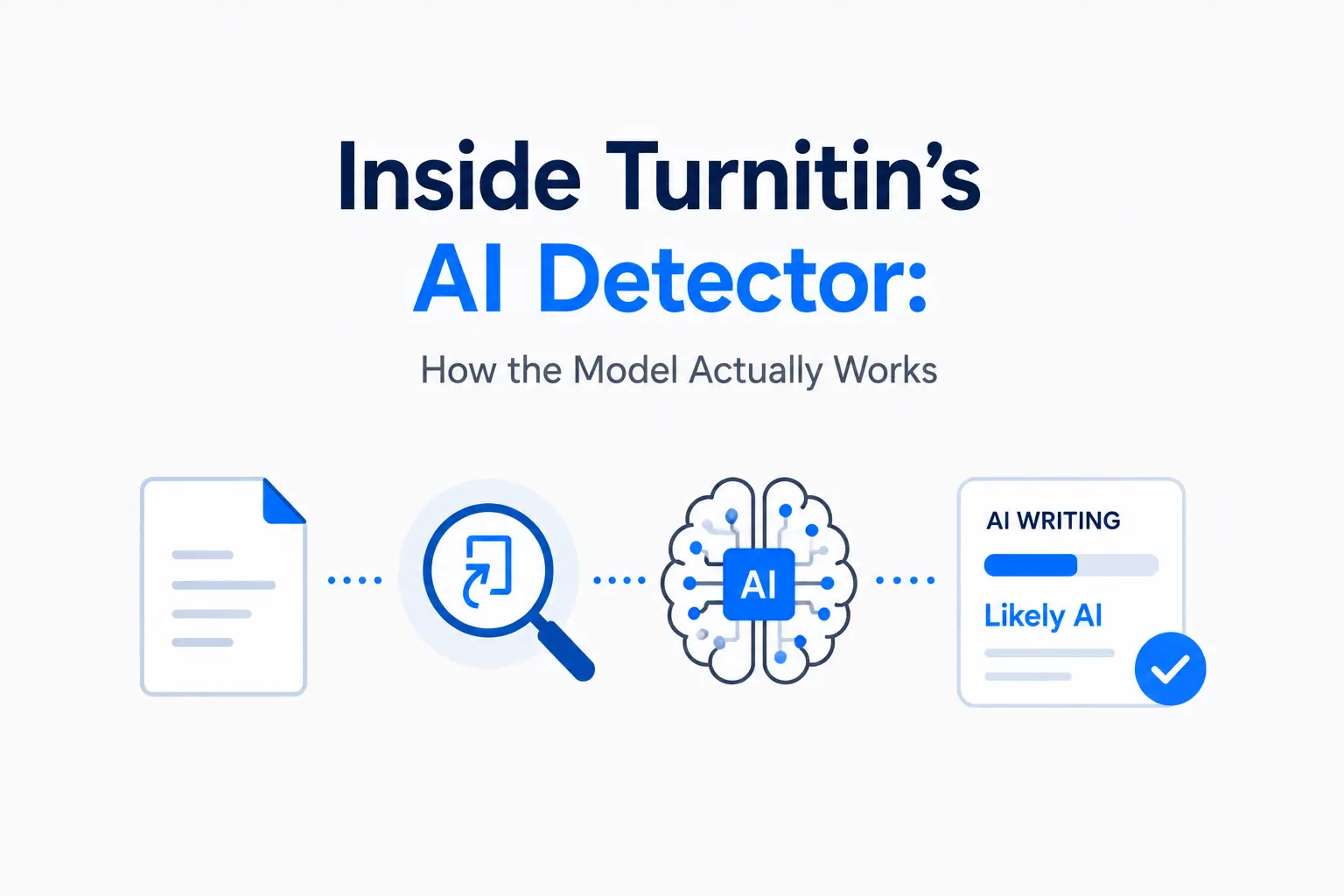
The practical picture: Turnitin is the most consistent AI detector across model outputs but has documented equity problems and drives most of the false-positive controversy. Copyleaks is a reasonable second on unedited AI text. SafeAssign alone runs no AI detection. Our guide on how Turnitin's AI detection works explains what these numbers actually measure.
Which universities use which
The strongest predictor is your learning management system. Blackboard institutions default to SafeAssign because it is bundled. Canvas, Moodle, and D2L Brightspace institutions typically deploy Turnitin via an LTI integration. Some institutions run both — SafeAssign at the LMS level and Turnitin as an optional deeper check for suspected cases.
Boston University documents both tools, having historically used SafeAssign and later added Turnitin for specific assignment types. Blackboard-dominant systems like state community college networks and many HBCUs tend to rely on SafeAssign only. Canvas-heavy R1 institutions — the Ivy League, most of the UC and CSU systems, most large public research universities — run Turnitin. Copyleaks appears at institutions that switched deliberately, usually for cost or AI-detection reasons.
The most reliable way to find out which system your university uses is to check the assignment submission page in your LMS — the tool's name is visible when you upload a file — or to look at your institution's academic integrity policy, which almost always names the platform in use. Your library's research guide often lists it as well.
Cost and institutional pricing
Pricing is negotiated per institution and is rarely published, but the rough hierarchy is: Turnitin is the most expensive, driven by database access and brand position; Copyleaks positions itself as a lower-cost alternative on the AI detection side; SafeAssign has no separate licensing cost for Blackboard customers because it is included in the LMS contract. This is a large part of why some institutions have moved away from Turnitin — the University of Illinois Springfield explicitly cited licensing cost when it switched to Copyleaks in 2024.
What this means for your submission
If your institution uses Turnitin, the similarity threshold and AI detection you should worry about are both Turnitin's — and no other tool will tell you what its report will show, because no other tool has access to the student paper repository. See understanding your Turnitin similarity score for the numbers that actually matter.
If your institution uses SafeAssign only, the database it checks against is smaller and no AI detection is running unless Copyleaks has been added. Your similarity risk comes primarily from the open web and your institution's own archive of previously submitted papers.
If your institution uses Copyleaks, both plagiarism and AI detection are being scored, but the AI detection is more sensitive to paraphrasing than Turnitin's and the plagiarism database is smaller. What triggers a Copyleaks AI flag will not necessarily trigger a Turnitin AI flag, and vice versa.
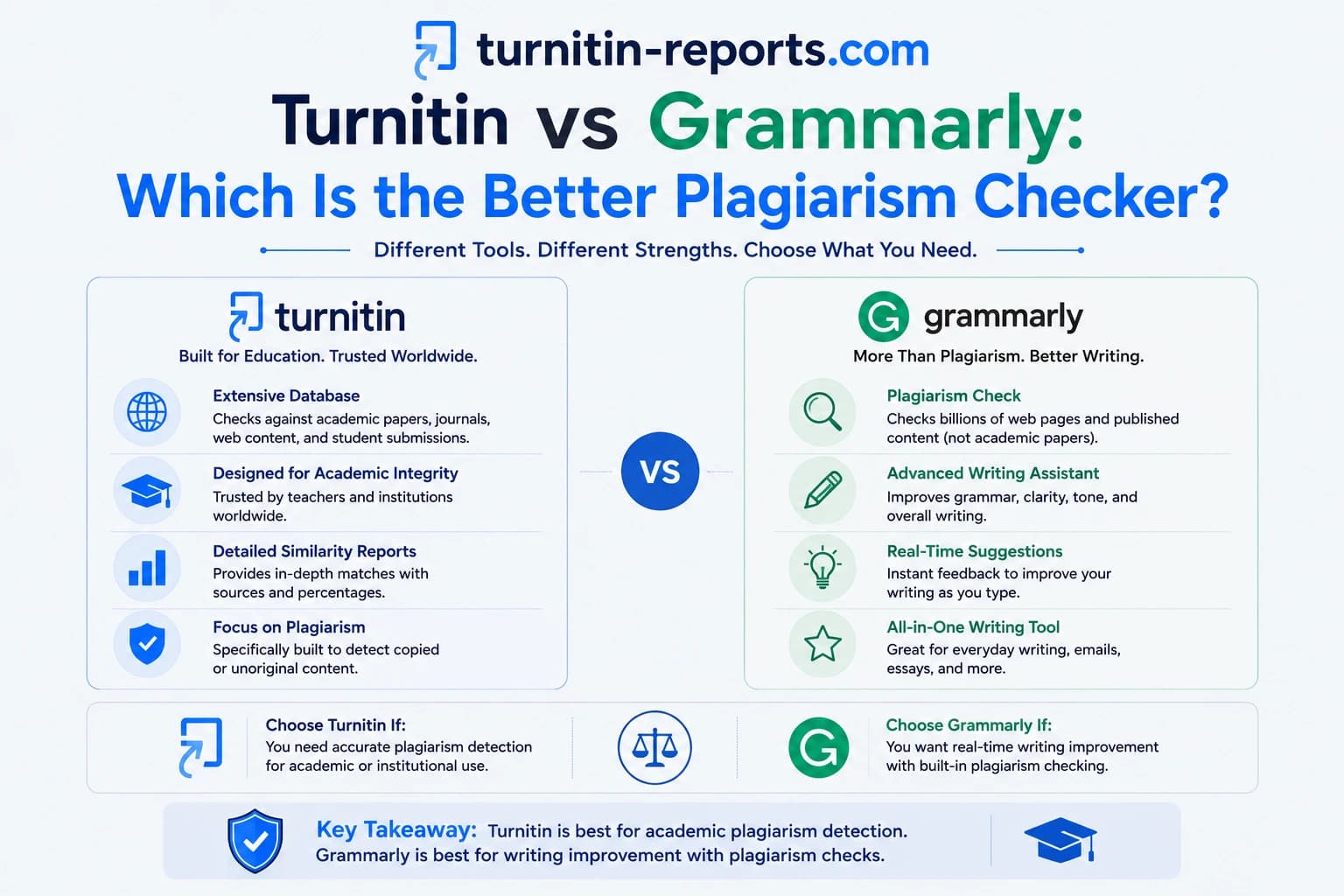
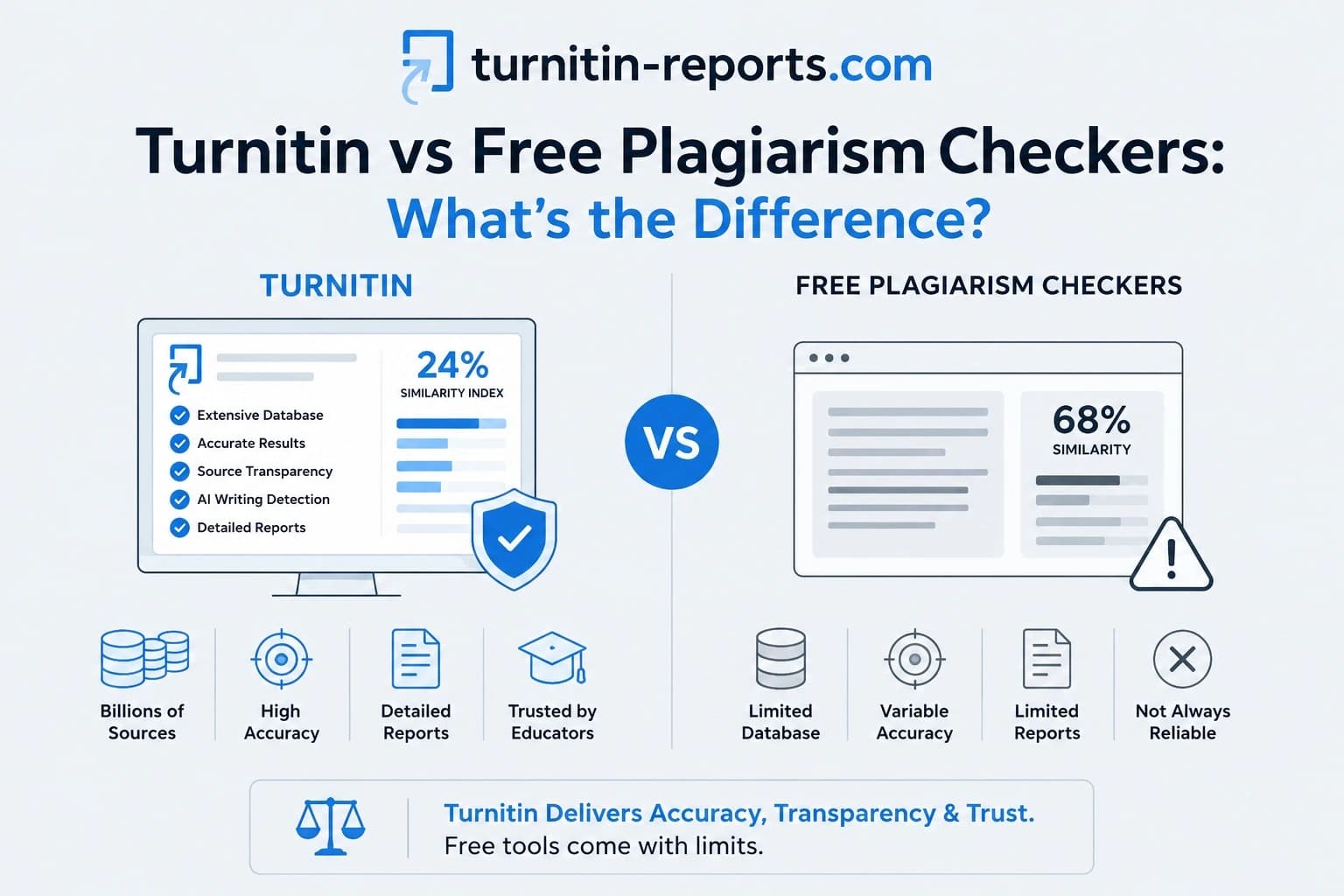
In every case, the tool your institution runs is the only one whose result actually counts. Running your paper through a free checker or a competing tool tells you very little about what your instructor will see. Our post on Turnitin vs Grammarly covers that gap in more detail.
Frequently asked questions
How do I find out which plagiarism checker my university uses?
Check the assignment submission page in your LMS — Turnitin, SafeAssign, and Copyleaks all display their name when you upload a file. Failing that, your institution's academic integrity policy or library research guide almost always names the platform in use. Blackboard institutions default to SafeAssign; Canvas, Moodle, and Brightspace institutions typically use Turnitin.
Does SafeAssign check for AI-generated writing?
No. SafeAssign has no standalone AI detection feature in 2026. Anthology, which owns Blackboard, partnered with Copyleaks to offer AI detection as a separate add-on inside Blackboard. If your institution uses SafeAssign only, no automated AI detector is being run against your submission — instructors would need to rely on other signals or a separate tool.
Which is more accurate at AI detection — Turnitin or Copyleaks?
Turnitin performs better on independent benchmarks against unedited AI output, with F1 scores around 0.92 versus Copyleaks at 0.87. However, Turnitin has documented false-positive problems with non-native English writing (61.3% flagged in one Stanford-linked study), which is why UC Berkeley, Vanderbilt, and several other universities have disabled its AI detector. Neither tool is reliable on heavily paraphrased or edited content.
Can Turnitin see papers submitted to SafeAssign?
No. The three systems maintain separate, non-interoperable databases. A paper submitted to SafeAssign at one institution is stored in Blackboard's repository and is invisible to Turnitin, and vice versa. This is one reason a paper reused across institutions using different platforms may not be flagged for cross-submission similarity even when it would be caught within either system.
If my university uses SafeAssign, do I still need to worry about Turnitin?
Only if your university also uses Turnitin for some assignments — some institutions run both, using SafeAssign at the LMS level and Turnitin for suspected cases or specific programs. If SafeAssign is the only platform in your submission workflow, your similarity risk is defined by SafeAssign's smaller database, not Turnitin's. Check your assignment submission page to confirm.
Ready to check your paper?
Get your Turnitin report in minutes.
Same report your institution generates — delivered privately, fast.